Crate Training in Spokane, WA
Whether your dog cries at bedtime, barks while you’re out, chews the door or won’t go near the crate, our crate training in Spokane makes crate training easy and fast. Your puppy or adult dog learns to settle there, day or night, and we teach you how to keep it that way. Get started today with a free consultation: we’ll meet you and your dog, share a few training tips and recommend the right program.
Check Out Our Reviews
How We Build a Crate Habit
Crate training and kennel training are the same thing, and they work for puppies, adult dogs and rescues alike. Here’s the path.
Free in-person consultation
We meet you and your dog, share a few training tips you can use right away and design a customized program based on your goals and your dog’s needs.
Make the crate a good place
Short, positive sessions: your dog explores the crate, walks in for praise and rewards, and learns that good things happen there before the door ever stays closed for long.
Longer stays, nights and car rides
Little by little, the door stays closed longer and you leave the room, so your dog learns to relax when left alone. Then Shayla coaches you through bedtime, car rides and vet visits.
Life Before and After Crate Training
Every dog is different, but these are the changes Spokane families come to us for most often.
Crate time right now
- Crying the moment the door closes
- Barking half the night
- Running away when it’s crate time
- Chewing the bars and the door
- Soiling the crate when left alone
- Wrecking the house when left loose
- Stressed in the car and at the vet
After crate training
- Walks in and settles on their own
- Quiet nights for the whole house
- Goes in on cue, no pushing or chasing
- Rests calmly with the door closed
- A clean crate and a better potty routine
- A safe, relaxed dog while you’re out
- Calm car rides, vet visits and travel
Two Ways to Crate Train in Spokane
Board and train. With 13+ years as a professional trainer, Shayla LaMonica knows that where a dog practices matters. Board and train dogs live in her home in Nine Mile Falls, a few at a time, and are cared for like her own. So crate time happens the way it will at your house: at night, during quiet afternoons and while people come and go in a real home.
In-home lessons. If you’d rather work at home, Shayla comes to you anywhere in the Spokane area, from Airway Heights to Liberty Lake, plus Coeur d’Alene and Post Falls. She helps you set up the crate, shows you how to introduce it and coaches you through the moments that usually go sideways.
Either way, you’re part of it. Every program includes hands-on coaching for the owner, so you know exactly how to keep the crate habit going at home.
Ready to get started? Click the button below and fill out a quick form to claim your free consultation. We’ll meet you and your dog in person, share a few training tips you can use right away and create a customized plan around your goals and your dog’s needs.
Why Crate Training Is Worth It
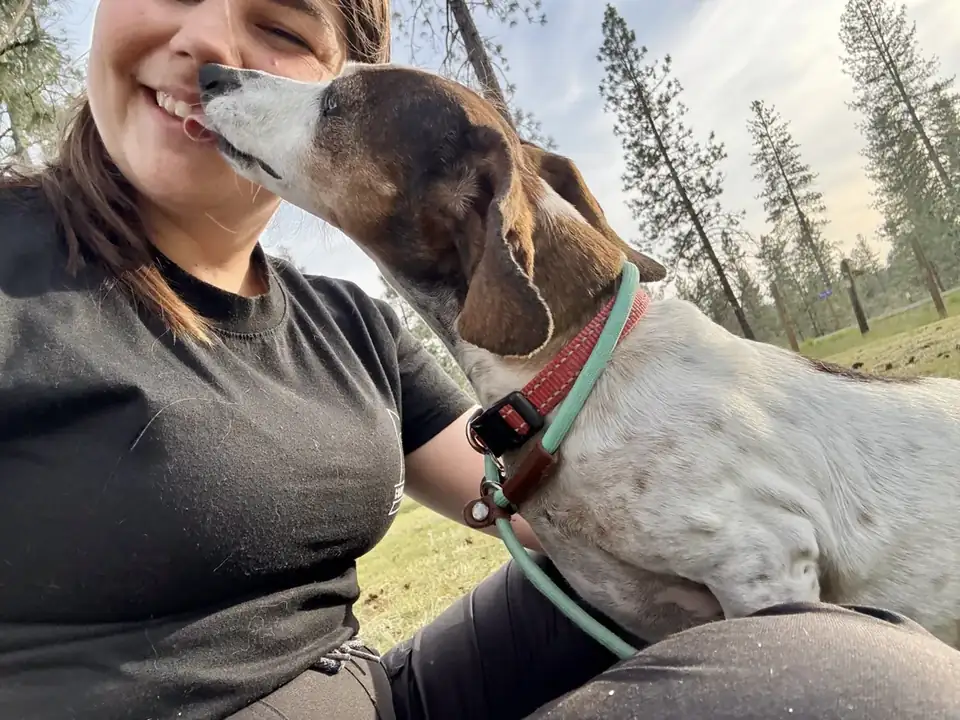
Some owners worry a crate is unkind. We understand. But for most dogs, a well-introduced crate isn’t a cage. It’s a safe spot to rest and one of the most useful tools a pet owner can have.
It supports house training. Dogs naturally avoid soiling where they sleep, so a properly sized crate helps a puppy learn to hold it and makes potty training far more predictable.
It protects your dog and your home. A young dog left loose can chew cords, swallow socks or take apart the couch. In the crate, they rest safely while you’re away.
It prepares them for real life. Vet visits, grooming, car rides, travel and boarding all go easier for a dog who already knows how to relax in a small space.
It gives everyone a break. Puppies and teenage dogs need a lot of rest, and many don’t know how to take it. A crate gives them a place to settle, and gives you time to cook dinner, take a call or sleep through the night.
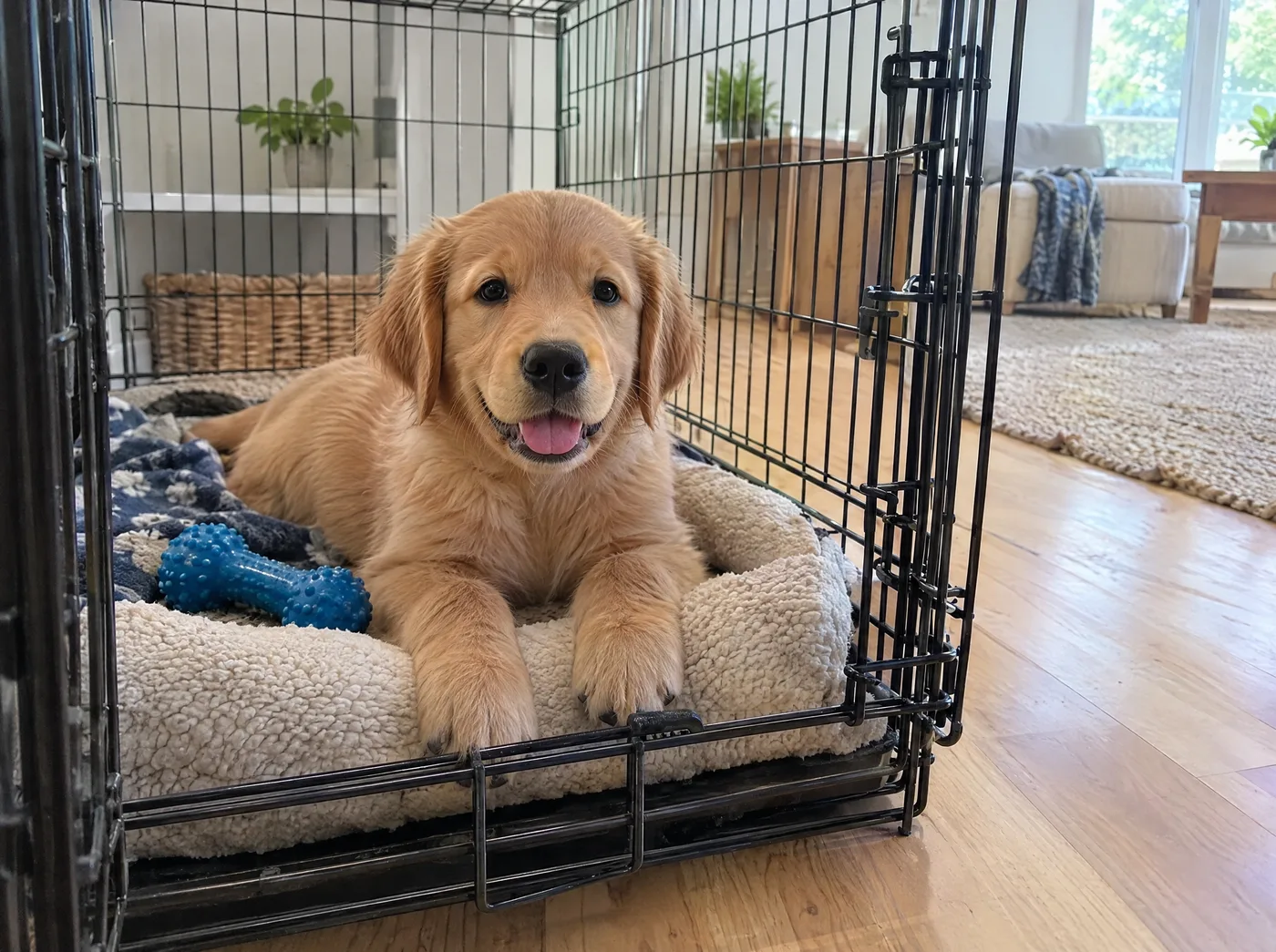
A Crate Should Feel Like Their Room
Dogs naturally look for a small, secure den to rest in. A crate gives them exactly that: a quiet place that belongs to them, where nobody bothers them and they can fully switch off. Plenty of crate trained dogs walk in on their own to nap with the door wide open.
How the crate is introduced makes all the difference. A dog who gets short, positive sessions that build up over time learns to love it. That’s why we never use the crate as a time-out and always pair it with exercise, play and plenty of time with you.
Crate training at Canine Community Center is about changing how your dog feels about that space. With praise, clear structure and a gradual plan, the crate becomes a place of security, for your dog and for you.
- Sized so your dog can stand, turn around and lie down
- A safe spot during dinner or a houseful of guests
- Introduced gradually, in short sessions
- Balanced with exercise, play and family time
Panic When Alone Needs a Different Plan
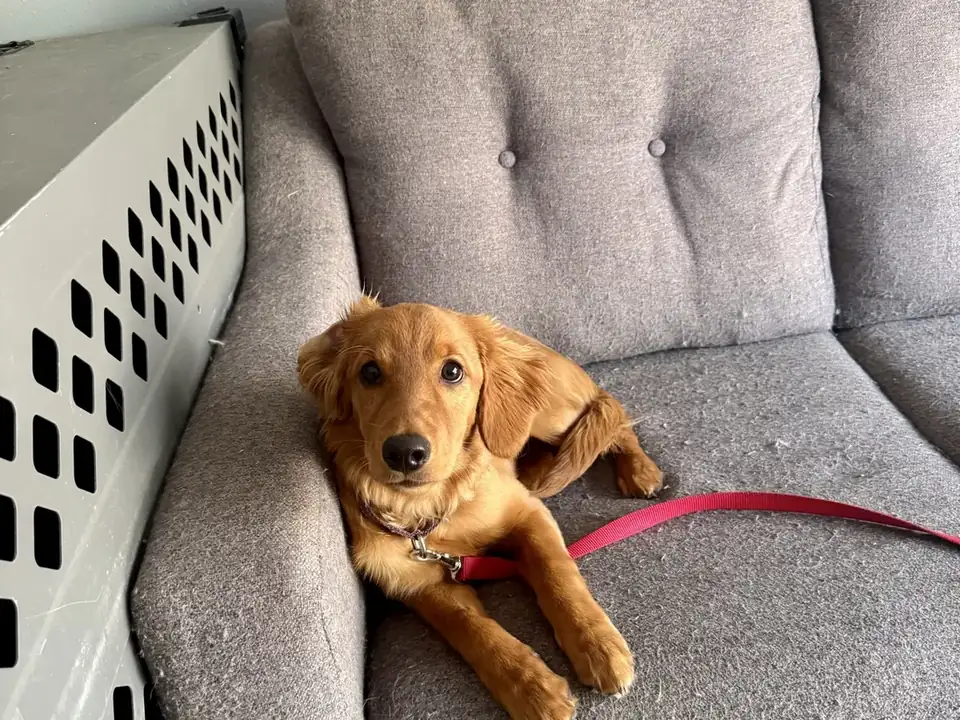
Most crate whining comes from a dog who simply hasn’t learned the routine yet. Some dogs, though, are really worried about being alone. Heavy drooling, nonstop howling, hurting themselves trying to get out, or soiling only when you leave can all point to separation anxiety, which calls for its own plan.
If that sounds like your dog, our separation anxiety training is the better place to begin. At your free consultation, Shayla will help you figure out which one you’re dealing with and what will help most.

Crate Training Questions
Is crate training a good idea?
For most dogs, yes. A properly introduced crate gives your dog a secure place to rest, supports potty training, keeps your dog and your home safe while you’re away and makes travel, vet visits and boarding much easier. The key is introducing it gradually and never using it as punishment.
What is the 7-7-7 rule for puppies?
It’s a version of the puppy “rule of sevens,” a socialization checklist. The idea is that in the first few months your puppy has positive experiences with around seven different surfaces, seven kinds of people, seven new places, plus new sounds, toys, food bowls and small challenges. Exact versions vary, but the point is calm variety early. A crate fits right in, since it’s one more new place your puppy learns is safe.
How much does crate training cost in Spokane?
It depends on your dog, the situation and what your dog needs. Every program is customized to your goals, whether it’s in-home lessons or board and train, so we don’t charge everyone the same flat rate for different situations. At your free consultation, Shayla meets your dog, builds a plan around your goals and gives you an exact quote, with no pressure to sign up.
How long can my dog stay in the crate?
That comes down to your dog’s age, potty needs and energy. Puppies need frequent breaks to go out, and no dog should spend most of the day crated. Shayla will help you set a schedule that mixes crate time with exercise, play and time with the family.
Where should I put my dog’s crate?
Somewhere your dog still feels part of the family but can rest, often a quiet corner of a living area. Many puppies settle faster at night with the crate close to your bed at first. Shayla can help you choose the best spot for your dog and your home.
Can older dogs learn kennel training?
Yes. Crate training, also called kennel training, works for dogs of any age, including adult rescues who’ve never seen a crate. It can take a little more patience, but the process is the same.
What if my dog panics in the crate?
Pause the crate practice and get help. Real panic, like injuring themselves trying to escape, can be a sign of separation anxiety rather than a crate problem. Book a free consultation and Shayla will help you find the right plan.
Explore Other Training Programs
Separation Anxiety Training
Help your anxious dog stay calm when you leave, without panic, barking or destruction.
Potty Training
End indoor accidents with a clear housebreaking routine for puppies and adult dogs.
Puppy Training
Start your puppy off right with manners, socialization and a foundation that prevents problems later.
Get Started Today
Claim your free in-person consultation for crate training in Spokane. We’ll meet you and your dog, share a few training tips you can use right away and build a customized program around your goals.