Dog Separation Anxiety Training in Spokane
Whether your dog howls when you leave, chews through doors and crates or has accidents when you’re gone, our separation anxiety dog training in Spokane will help your dog feel safe alone. Your dog learns to relax while you’re out, so you can leave the house without worrying about what you’ll come home to. Get started today with a free consultation: we’ll meet you and your dog, share a few training tips and recommend the right program.
Check Out Our Reviews
Your Plan for Guilt-Free Goodbyes
Free in-person consultation
We meet you and your dog, share a few training tips you can use right away and design a customized program based on your goals and your dog’s needs.
Training plus coaching
Board and train or in-home lessons, built around your dog and your daily routine. You learn every step alongside your dog, so the progress carries over to your house.
Longer stretches of calm alone time
Following the plan, you gradually stretch the time your dog spends on its own, from a few minutes in another room to a full workday, with Shayla adjusting the plan as your dog progresses.
Lifetime group class access
You also get access to our group classes for the lifetime of your dog: a place and a support group to practice your skills, keep everything your dog learned and ask questions whenever they come up.
Calm Independence, One Skill at a Time
Separation anxiety training isn’t one trick. It’s behavior modification: a set of skills and habits that add up to a dog who can relax without you. Here’s what the plan can include, adjusted to your dog.
Settling on cue
A place command gives your dog a job and a spot to relax, so you have a simple way to help them settle at home, even when the house gets busy.
Comfort with trigger sounds
Many anxious dogs fall apart over sounds, not just your absence. Shayla can work with the exact sounds that set your dog off, like your own doorbell, until they become background noise. That kind of detail is what makes a plan fit your dog.
Independence around the house
We teach your dog to be okay in a different room from you, behind a gate or a closed door, long before we ask it to handle an empty house. Small wins like this build the trust your dog needs for longer absences later.
Departures that mean nothing
Keys, shoes, coats and the garage door become boring, everyday noise instead of the opening notes of a panic spiral.
A predictable routine
Exercise, meals, training and rest at steady times. A consistent daily structure lowers stress for anxious dogs and gives them something to count on.
Confidence out in the world
Outings to parks and stores around Spokane build general confidence, and a more confident dog usually copes better with time alone.
Separation Anxiety Dog Training at Home
Separation anxiety is tied to a place: your front door, your crate, your departure routine. That’s why in-home training is often a great fit. Shayla comes to you, anywhere in the Spokane area plus Coeur d’Alene and Post Falls, looks at your setup and builds a plan around your real schedule.
A board and train can also help, especially when anxiety comes with other problems like barking, reactivity or a dog who has never learned to settle. Your dog moves in with Shayla in Nine Mile Falls and learns calm routines, crate comfort and how to handle normal comings and goings. Longer programs, especially the 6-week program, give fearful dogs and more complex behavior cases extra time.
Because board and train dogs live in a real home, they practice the exact things they struggle with at your house: settling while people move around, resting in a crate in a quiet room and handling short stretches on their own.
Either way, whichever program you choose will get you the results you want. At the end, you’ll have a calm, well-behaved dog who can relax at home alone, so you can come and go without the guilt or the worry.
Ready to get started? Click the button below and fill out a quick form to claim your free consultation. We’ll meet you and your dog in person, share a few training tips you can use right away and create a customized program around your goals and your dog’s needs.
Leaving Home Now vs. After Training
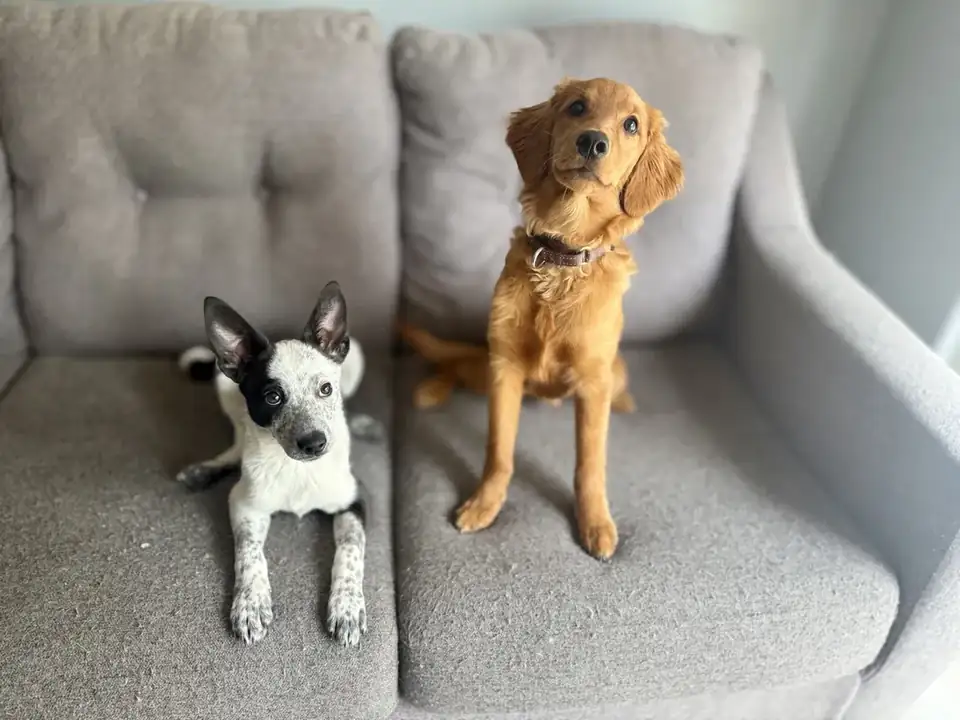
Separation anxiety shows up in many ways. Here’s what a normal weekday looks like for a lot of Spokane families, and what we work toward with them.
Leaving home now
- Howling and barking the moment you leave
- Chewed door frames, blinds and carpet
- Accidents only when you’re gone
- Panic and escape attempts in the crate
- Your dog follows you from room to room
- Pacing and drooling when you grab your keys
- Every plan is built around your dog
Leaving home after training
- A quiet house while you’re out
- You come home to the room you left
- A clean house when you walk back in
- A dog who rests calmly in the crate
- A dog who can relax in another room
- Keys and shoes become boring noise
- Dinner out or a full workday, guilt-free
The Guilt of Closing the Door
You know the sound. The whining starts before you reach the car, and by the time you back out of the driveway it’s a full howl. You sit at a red light picturing the scratched door, the shredded blinds and the puddle by the crate, and you wonder how long you can keep doing this.
Separation anxiety shrinks your life a little at a time. You turn down dinner with friends. You rush home on your lunch break. You plan every errand around how long your dog can cope, and maybe you’ve already had a note from a neighbor or a call from your landlord about the barking.
If that’s you, please hear this: your dog isn’t being spiteful, and you didn’t cause this by loving your dog too much. Anxiety is a real behavior problem with real, workable causes. At Canine Community Center, anxiety, including separation anxiety, is one of Shayla LaMonica’s specialties, and dogs like yours are exactly who she wants to help.
Over 13+ years and thousands of dogs, plus volunteer work at her local shelter doing behavior evaluations and training plans for hard-to-adopt dogs, Shayla has met plenty of dogs who fell apart the moment their people walked out. Your dog can make progress too, with a plan that fits it.
The goal isn’t a dog who loves you less. It’s a dog who trusts that you’ll come back, so it can nap on the couch while you’re gone and greet you calmly when you walk in.
A Crate That Feels Like a Safe Place
For many anxious dogs, the crate is the scariest part of the day, because it’s where they get left. We turn that around. Shayla builds crate and kennel comfort slowly, with praise, calm routines and short, successful practice, until your dog walks in on its own and lies down to rest.
A crate is never a punishment, and it isn’t a place to park a dog for unreasonable stretches. Think of it as a den: a quiet, predictable spot where your dog learns that alone time means rest time.
- Gradual crate and kennel introduction, at your dog’s pace
- Calm entries and exits, with no big emotional goodbyes
- Settling skills on a place cot as well as in the crate
- Practice in the same setup you’ll use at home
What Separation Anxiety Really Is
True separation anxiety is panic about being left alone, or about being apart from one particular person. It isn’t the same as boredom, a lack of exercise or a puppy who simply hasn’t learned the house rules yet. A bored dog chews because chewing is fun. An anxious dog chews, digs and claws because it’s desperate to get out or get to you.
The signs usually show up within minutes of you leaving, or even while you’re getting ready: pacing, panting, drooling, whining, barking or howling, accidents in a house-trained dog, destruction near doors and windows, and escape attempts. Some dogs follow their person from room to room and can’t settle unless they’re touching them.
Other behavioral issues can look a lot like it, such as noise phobias, crate panic, attention-seeking or a more general anxiety. Part of Shayla’s job is to work out which one you’re dealing with, because each needs a different plan. Getting the cause right from the start means your training time goes toward what your dog actually needs.
Life changes are a common trigger. A move, a new work schedule after months at home, a death in the family or a stay at a busy kennel can all shake a dog’s sense of security. Knowing what set things off helps us decide where to start.
If the anxiety came on suddenly, your dog has started having accidents or it has hurt itself trying to escape, start with a veterinary visit. Your vet can check for pain or illness and talk with you about whether medication makes sense. That’s their call, not ours.
- Separation anxiety: panic that starts when you leave
- Boredom: destruction from pent-up energy, any time of day
- Noise phobia: fear of thunder, fireworks or the doorbell
- Crate panic: fear of confinement, even with you home
When Leaving Home Becomes a Crisis
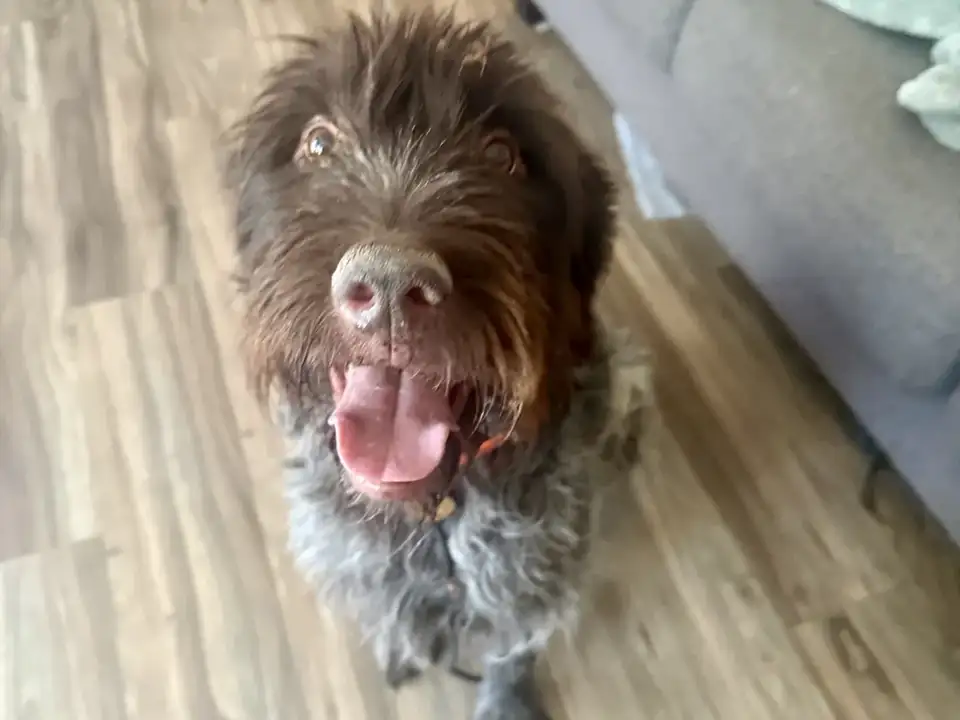
Separation anxiety ranges from mild whining to dogs who hurt themselves trying to escape. If you recognize several of these, a structured training plan can help.
Separation Anxiety Training Questions
How much does it cost to train a dog with separation anxiety?
It depends on your dog, the situation and what your dog needs. Every program is customized to your goals, so a dog with mild separation anxiety and a dog who panics in the crate can need very different amounts of work, and we don’t charge everyone the same flat rate for different situations. At your free consultation, Shayla meets your dog, builds a plan around your goals and gives you an exact quote, with no pressure to sign up.
What is the 3-3-3 rule for dogs with anxiety?
It usually refers to how adopted dogs adjust: the first 3 days are about decompressing, the first 3 weeks about learning your routine, and around 3 months about truly feeling at home. Many new dogs show some stress when left alone early on. Building short, calm alone time from the first week helps keep that stress from turning into full separation anxiety.
How can I quickly help my dog with separation anxiety?
A few things help right away: keep departures and arrivals low-key, give your dog exercise and a chance to sniff before you leave, offer a long-lasting chew or food puzzle, and practice very short absences that end before your dog panics. Never punish your dog for what happened while you were gone. Quick tips take the edge off, but lasting change comes from a structured plan. Skip the long, emotional goodbye, too. It feels kind, but it can wind an anxious dog up right before you walk out.
Is it separation anxiety or just boredom?
Timing is the big clue. Separation anxiety starts soon after you leave and comes with signs of distress like drooling, pacing, howling and escape attempts, often near doors and windows. Boredom chewing happens any time and looks more relaxed. If you’re not sure, Shayla can help you sort it out at the consultation. A simple phone camera recording of the first 30 minutes after you leave can tell you a lot, and it’s useful to bring to your consultation.
Will getting another dog or a cat help?
Sometimes a companion helps a little, but it rarely solves true separation anxiety, because most anxious dogs are attached to their person, not just to company. Adding another pet can also add new problems. It’s usually better to train the dog you have first. If you already have other pets, we take them into account in the plan, since a calm housemate can be part of the routine.
Should I crate a dog with separation anxiety?
Once the crate feels safe, yes. Some dogs settle better in a crate, while others panic and can hurt themselves trying to get out. That’s why we build crate and kennel comfort gradually before relying on it. Signs a crate isn’t working yet include bent bars, a wet chest from drooling or a dog who won’t go in even for food. If you see those, stop leaving your dog crated alone for long periods and get help early.
Do you offer separation anxiety training in Spokane Valley, Mead and Coeur d’Alene?
Absolutely. Shayla’s in-home training reaches homes across the Spokane area, including Spokane Valley, Mead, Deer Park and Liberty Lake, and Shayla’s Idaho license means she can work with you in Coeur d’Alene or Post Falls as well. Board and train dogs live with her in Nine Mile Falls during their program.
Can a puppy have separation anxiety?
Puppies often cry when they’re first left alone, and that’s normal. The good news is that puppyhood is the easiest time to teach calm alone time and crate comfort. If your puppy’s distress is intense or getting worse, it’s worth getting help early, and puppies are welcome in our programs. Short daily practice in a crate or behind a gate, while you’re still home, is one of the best habits you can start this week.
Explore Other Training Programs
Crate Training
Teach your dog to see the crate as a calm, safe space. Less anxiety, less destruction.
In-Home Dog Training
One-on-one training in your home or out in public, built around the problems you deal with every day.
Board & Train
Your dog lives and trains in Shayla's home for 2, 4 or 6 weeks. The fastest path to a calm, reliable dog.
Get Started Today
Claim your free in-person consultation for separation anxiety dog training in Spokane. We’ll meet you and your dog, share a few training tips you can use right away and build a customized program around your goals.